Start from where the game will live
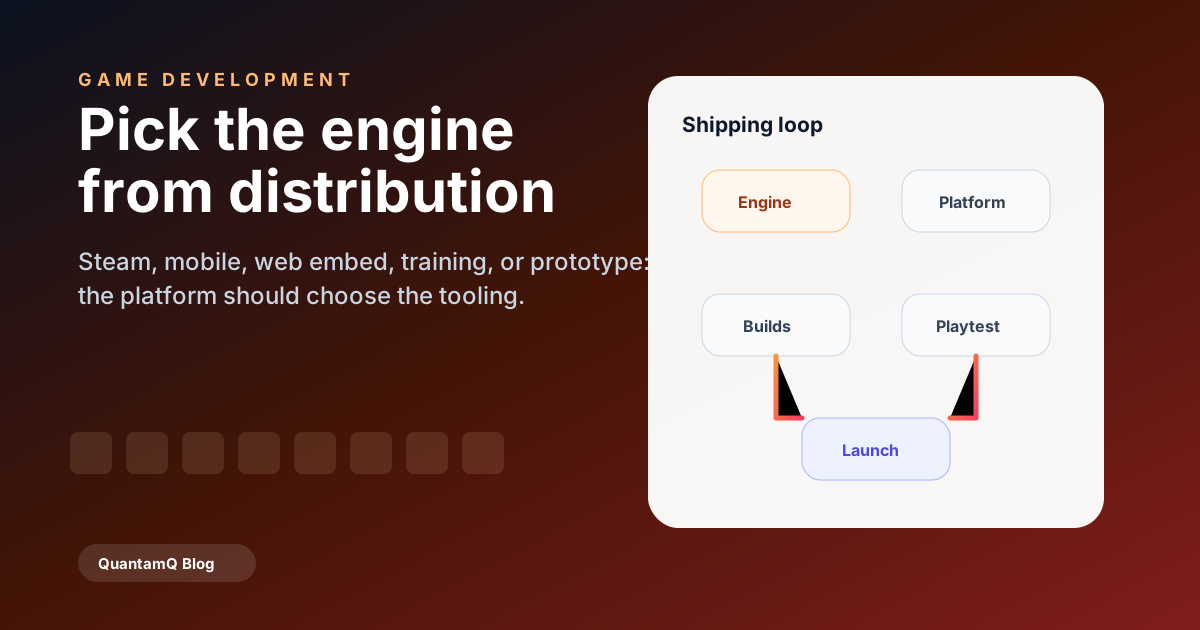
The fastest way to make a bad engine choice is to pick the engine first. Start instead with where the game will be played — Steam, mobile stores, web embed, social, or an internal training context — and the engine usually falls out of that conversation.
When each engine is the right pick
A short, opinionated map of when each major engine is the right call in 2026:
- Godot — small to mid-size 2D and 3D titles, indie teams, projects that value open source and a permissive licence.
- Unity — broad asset ecosystem, mobile-first titles, AR experiences, teams already invested in C# tooling.
- Unreal — high-fidelity 3D, photoreal visualisation, projects with serious environment art investment.
- Web-native (PixiJS, Phaser, Three.js) — embeddable games, browser-first audiences, marketing experiences, internal training games.
When each engine is the wrong pick
Knowing when an engine is wrong is as useful as knowing when it is right. Unreal is usually overkill for a small 2D game or a first indie title — its power comes with a steeper learning curve and a heavier pipeline than early projects need. Godot is the weaker choice when you need cutting-edge photoreal 3D or a very large third-party asset marketplace to lean on.
Unity is hard to beat for mobile reach and ecosystem, but if long-term licence and pricing-policy stability is a hard requirement, factor in its history of pricing-policy change before you commit. Web-native engines trade raw 3D horsepower for instant reach in a browser, so they are the wrong tool when you genuinely need console-grade fidelity or heavy native device features.
Tooling around the engine matters more than the engine
Source control discipline, automated builds, a real bug tracker, and a way to ship test builds to playtesters in under an hour are worth more than any engine debate.
Pick the engine your team can build the project in, then invest in the surrounding tooling. That is where indie projects ship — or quietly die.
Frequently asked questions
What does a small indie game project cost?
Treat any public figure as planning guidance, not a quote — cost is driven by art direction, scope, and the number of platforms, not by the engine you pick. A small first project (a short narrative game, a simple multiplayer prototype, or a web-embed experience) commonly falls in a planning band of roughly 25,000 to 90,000, with art direction and scope moving it the most.
Which game engine is best for a browser-based game?
For a game that runs in the browser — a marketing experience, training game, or lightweight social or embedded game — a web-native engine is usually the right call. PixiJS suits fast 2D, Phaser suits 2D games that want built-in game systems, and Three.js suits 3D in the browser. Reach for Unity or Godot web export only when you already need their editors for a larger title.
Is Godot or Unity better for a first indie game?
For a small, focused 2D or 3D title, Godot is a strong default in 2026: it is open source, lightweight, and carries far less commercial licence or pricing-policy risk. Choose Unity instead when you need its large asset ecosystem, mobile-first tooling, or an existing C# team. Match the engine to the game and your team’s skills, not to hype.
Can a game be built as a web embed?
Yes — web-native engines like PixiJS, Phaser, and Three.js have never been more capable. For marketing experiences, training games, and lightweight social games the web is often the right platform.